the stroop


The Stroop blog discusses new ideas in retail, Internet, and e-commerce technologies. We offer a future perspective on how the retail industry will be shaped based on emerging and potentially disruptive technologies.


Wednesday, June 30, 2010

The Race Against Drug Resistance


My time at CURE Pharmaceutical taught me that it's not enough to create just one great drug to alleviate malaria (or any disease, for that matter) - it's necessary to create several.

The body's simple physiological response to the same medication over and over again is to develop a resistance to that drug. Therefore, even though Coartem is a fantastic drug that saves many children with malaria, there needs to be four, five, six, even seven Coartem-like drugs out there. Even though it's quite expensive to create new drugs (as detailed above), the trending is telling global health stakeholders that there is no greater health priority than helping solve drug resistance.

This resonates deeply with organizations like the Center for Global Development, which just published a fascinating report entitled "The Race Against Drug Resistance." Click here to see the report.

I won't steal the thunder of the report, but I will relay it's call to action (it was really quite thought provoking). Consider the following:

"We have the means to slow the advance of drug resistance...

Donors and philanthropic organizations need to ensure that their laudable efforts to increase access to drugs in the developing world are accompanied by measures to protect the continued efficacy of drug treatment...

Companies need to prioritize resistance reduction in their research and development strategies, and ensure that their products remain of the highest quality throughout the distribution process...

Governments have a responsibility to provide regulation and oversight of distribution and use, as well as to properly support public health laboratory facilities and surveillance systems to detect and monitor drug efficacy...

...For the sake of all people who seek effective health care, now and in the future, drug resistance must be addressed urgently and aggressively as a global health priority."

Tuesday, June 29, 2010

Why a First Data Acquisition of PayPal is Plausible


If you cover the e-commerce industry at all, you know that eBay is exploring its strategic options with PayPal. It's public knowledge that PayPal is experiencing significant, global growth - but at the same time, it's also enabling eBay competitor's with payment advantages. And, if eBay were to stop PayPal from working with its competition, eBay would be severely prohibiting PayPal's corporate growth.

eBay is stuck between a rock and a hard place.

So if, indeed, eBay divests PayPal, it's my speculation that First Data will gobble it up. The trend that points me in this direction is a fight for more e-commerce payment market share. Visa pulled out its big guns with its acquisition of Cybersource earlier this spring. The fact that Visa paid 40x Cybersource's EBIT shows how badly they wanted a foothold in this market.

And why not? E-commerce is 4-5% of total retail sales in the U.S. and quickly becoming a larger and larger portion. Processors that can get in now will have powerful winds of growth under their wings.

On top of this, Visa and First Data have always had a bit of a rivalry, and First Data wants a bigger share of e-commerce. So to me it makes sense. Why shouldn't First Data acquire one of the most dominant names in e-commerce?

So maybe we shouldn't be so surprised if the new name is: PayPal, a First Data company.

Monday, June 28, 2010

The Underpinnings of Big Pharma's Future


Last year, I wrote a white paper on the future of the pharmaceutical industry and the key trends underpinning its revolution. Today, I decided to publish it on The Stroop!

The paper, entitled "The Underpinnings of Big Pharma's Future," can be downloaded here.

If you only have time for an excerpt, here's a piece from the Executive Summary:

The pharmaceutical industry is profoundly changing. Lackluster shareholder returns, a dearth of new drugs in the pipeline, and an abundance of patent expirations are making traditional business models obsolete. On top of this, shifting priorities between the payer, provider, and pharma in developed markets are creating entirely new industry dynamics. Finally, large opportunities in emerging markets are making Big Pharma firms think more strategically about the where they compete—and mind you, most emerging markets are ruled by generics, not patented drugs, which are the life-blood of Big Pharma.

All of these factors are working to compose a new and more complex industry—an industry that will demand new business models. The “good old days” of spending 15-20% of total revenue on Research and Development in the hope of developing one or two blockbuster drugs are gone. While the industry still possesses significant opportunity for growth and expansion, the strategy for translating the opportunity into profit looks very different.


Email any comments to thestroop@gmail.com.

Sunday, June 27, 2010

On the Verge of the First U.S. Mobile Payments Ecosystem


Apple, Visa and DeviceFidelity are close. Visa Inc. and DeviceFidelity, Inc. are working to allow iPhone users to make payments by simply waving their iPhone in front of a contactless payment terminal. The new technology, developed by DeviceFidelity and certified by Apple, combines a protective iPhone case with a secure memory card that hosts Visa's contactless payment application, called Visa payWave. The technology will work for both iPhone 3GS and iPhone 3G devices.

iPhone users will be able to make Visa mobile payments in retail stores, at fast food restaurants, in taxis, during sporting events (such as at baseball games), and also make purchases at vending machines that have contactless payment terminals. Thousands of merchants throughout the U.S. have already upgraded their payment terminals to allow consumers to make Visa mobile payments. Market trials of the payment-enabled iPhone are scheduled to start this summer.

But how fast will adoption be? Analysts speculate: not fast.

What can we learn from Japan? Well, even in an extremely technology-savvy society like Japan, after 7-8 years of mobile payment introduction, only 17% of the country has an active mobile payment account. Celent, a financial services research firm, estimates that there are 28 million registered mobile payments accounts in Japan and about 20 million active mobile payments accounts. These constitute 24% and 17% of all contactless payment accounts, respectively.

Prospects for the U.S. are in the range of 4-8% penetration of contactless payments. Even so, I believe this is where the market is moving. iPhone users in particular would prefer that their phone be everything: a phone, an iPod, a computer, a TV remote, a passport, a credit card - everything.

I, for one, will be using my iPhone in the Visa network this summer.

Saturday, June 26, 2010

A.T. Kearney's Global Retail Development Index


"Retail executives have learned again that core markets like the United States and Europe are not the powerful engines of growth they would like," said Hana Ben-Shabat, A.T. Kearney partner. "Reliance on developing countries for future growth is no longer a 'nice-to-have,' but a necessity. Establishing operations in a portfolio of countries both small and large offers the best path to global success for retailers."

This was the quote in a recent A.T. Kearney's 9th Annual Global Retail Development Index (GDRI). Go here for the press release.

The top 10 countries in the 2010 GRDI are a diverse mix of large and small markets: China, Kuwait, India, Saudi Arabia, Brazil, Chile, United Arab Emirates, Uruguay, Peru and Russia.

So here's my question: what is the easiest way for retailers to expand into these markets. And here's your answer: "an international e-commerce solution."

I wrote about international e-commerce solutions in an earlier blog post, and I truly believe these solutions to be the answer for retailers assessing the attractiveness of new emerging markets. What better way to judge a new market than e-commerce? You don't have to set up brick-and-mortar stores and, with a little marketing push, you can see how your brand performs. It's the most cost-effective way to expand internationally.

The other fascinating finding from the study was that China returned to the top of this year for the first time since 2002. According to the study, "Chinese consumers are becoming increasingly comfortable with Western-style retail formats."

If this is the case, then the harvest is plentiful. The U.S. will never run out of people to sell to.

Friday, June 25, 2010

Global Sustainability: the Delicate Dance between For-Profits and Non-Profits


Last year, I read a white paper that changed my view on the social impact space. Written by the Monitor Group, this four-year study started with the belief that "the next microfinance" solution is out there, and it can and will alleviate global poverty. To find it, Monitor honed in on three questions:

- Who will serve the poor as customers?
- Who will engage them as workers or producers?
- And how will that service, or that engagement, occur?

Click here to see the study.

In sum, Monitor identified seven different business models that, if employed by the right corporations, are long-term solutions in the quest to end global poverty. The most interesting additions to the paper were case studies of how the adaption of these private sector models have worked successfully in even the poorest areas of the world.

This was a revelation to me. Big Fortune 500s and VC-funded start-ups alike could engage the poor as customers, make a profit, and they'd be doing a great humanitarian service. That prompted me to join a start-up called CURE Pharmaceutical, a health venture that is attempting to do what Monitor outlined. I believed this to be the answer to global sustainability.

But there problem; I started to discount philanthropic effort. In my mind, the alleviation to global poverty rested in the hands of for-profit businesses. I didn't think non-profits were all that necessary anymore.

However, after some time studying the space, I came to the realization that non-profit businesses needed to exist, too.

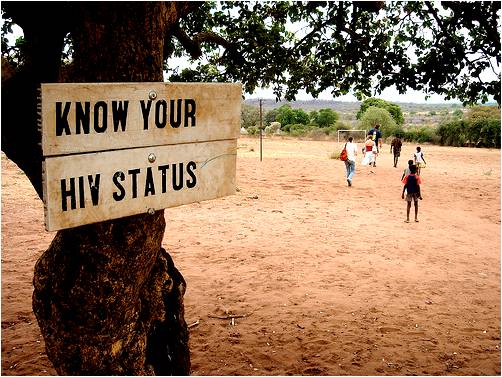
For-profit models simply don't work for some social issues. Take AIDS, for instance. AIDS patients take ARV treatments so often that, if living on $2 per day, patients would never be able to afford these treatments in a for-profit model. AIDS test kits are similar. In order for maximum prevention, devices like this need to be given away for free, and this is done by philanthropic organizations.

So I find myself realizing that maximum social impact will be reached by a mix of for-profit and non-profit activity. It's a delicate dance. Though, I must say, I think a lot more emphasis needs to be put on for-profit firms serving the base of the pyramid. Right now, it's probably 20% for-profit and 80% non-profit; it needs to be something more like 60% and 40%.

Email opinions to thestroop@gmail.com.

Thursday, June 24, 2010

The Future of Pharma: the Third World?


Ostentatious title, is it not? For who could assume to know what the ever-changing pharmaceutical industry could turn into? I will not attempt to divulge the future in its entirety, but I will hit on one future scenario that I envision: turning third-world emerging economies into viable pharmaceutical marketplaces.

It's not about greed (well, to some extent it always is, but it's certainly not entirely greedy). The three billion people that live on $2/day need quality, affordable products, too! 99% of the time, due to a lack of good products and the bargaining power of supplies, the base of the pyramid gets ripped off. It's unfortunate; they are forced to take what's offered.

But if there was a way to make products affordable while maintaining their quality - in areas of the world that suffer from disease and sickness more so than the rest - that would be an high-revenue, high-humanitarian product.

We already see Big Pharma moving there. The big guys are acquiring little generics firms which target emerging economies. Glaxo just did it with Laboratorios Phoenix in Argentina. But let's let the numbers do the talking. IMS Health, a leading provider of prescription drug data, forecasts drug sales growth in leading emerging markets will average 14-17% annually, while major developed markets grow 3-6%.

In Africa, several countries are large, profitable, growing markets. Egypt, South Africa, Morocco, Kenya, and Nigeria are all $1+ billon pharma markets, and Jordan is a little below half a billion and growing at approximately CAGR 10%.

Watch for more and more third-world partnerships, acquisitions, and JV's to form. Even more on the edge: watch for more and more in-country manufacturing. Now we're talkin' crazy.